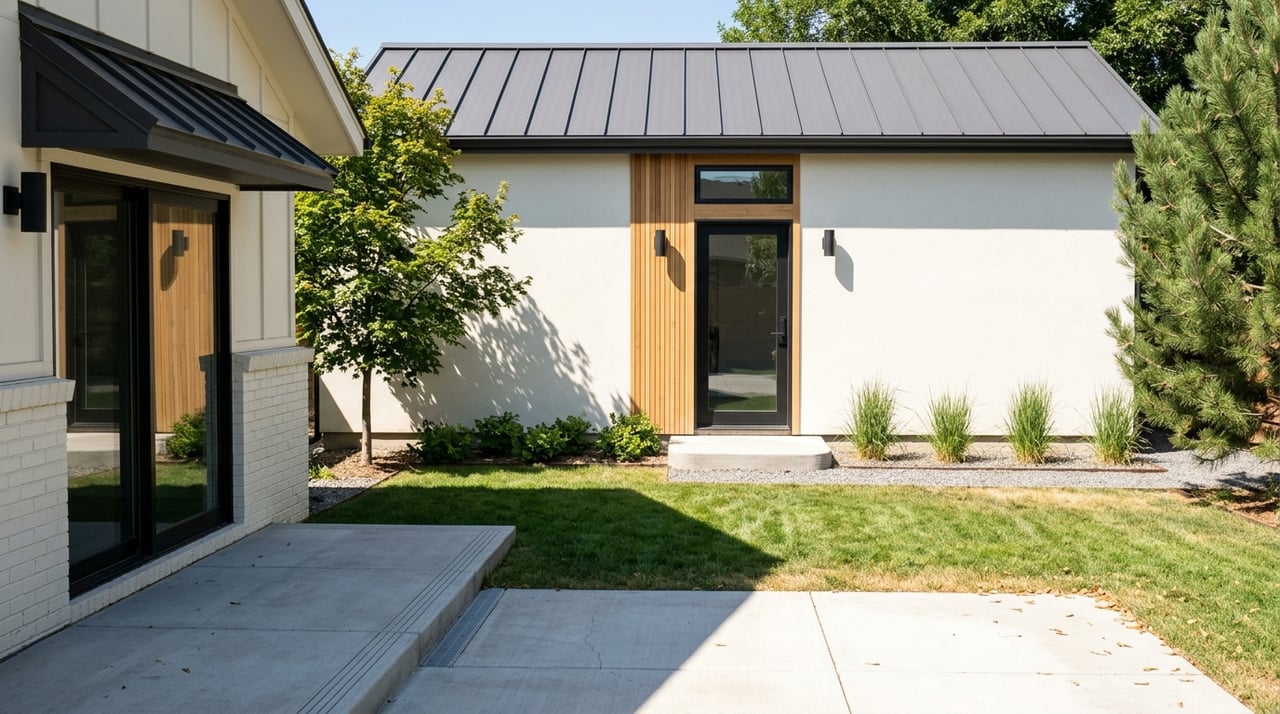
If you are looking at Millcreek through an investment lens, rental income and ADU potential can add a compelling layer to the conversation. But in this market, the details matter. Millcreek has steady signals of rental demand, yet not every property can support the same strategy, and ADU rules are specific. This guide will help you understand where the opportunity may be, what constraints to watch, and how to evaluate a property more confidently. Let’s dive in.
Why Millcreek Stands Out
Millcreek has a housing mix that supports more than one path to rental use. The city reports 26,298 housing units, including 13,655 detached homes, 7,447 apartments, 2,530 condos, 1,232 duplexes, 1,191 townhomes, and 214 ADUs on shared lots. That mix tells you Millcreek already functions as both an ownership and rental market.
The age of the housing stock is another important clue. About 34% of homes were built before 1960, and 68% were built before 1980. For buyers evaluating ADU potential, that may mean more homes with basement layouts or internal conversion possibilities, assuming the property can meet current code and city requirements.
Demand drivers also look durable. Millcreek’s estimated population is 63,926 with 25,920 households, and 37.8% of households are renter-occupied, which is higher than Salt Lake County’s 32.9%. The city also projects a shortage of 3,073 units affordable to households below 100% of area median income by 2030, which points to continued need for rental housing and smaller living spaces.
What Rental Demand May Mean for You
For a buyer or homeowner, those numbers suggest Millcreek may continue to support long-term rental demand. The 2020 to 2024 Census estimate lists median gross rent at $1,492, median household income at $98,045, and median owner-occupied home value at $627,200. Together, those figures help frame the balance between ownership costs and the appeal of rental options in the city.
Planning trends may also support demand in certain areas over time. Millcreek says its general plan and city-center master plan focus on walkability, reducing internal traffic and parking demand, and creating a central gathering place. For you, that may make homes near amenity-rich corridors worth a closer look when comparing long-term rental appeal.
Long-Term Rental Rules in Millcreek
In Utah, a rental dwelling is generally a residence rented for one month or longer. State law allows municipalities to require licensing and inspections for rental dwellings, and Millcreek does regulate this category.
Millcreek’s long-term rental licensing process asks for a site plan that identifies rental square footage and assigned parking spaces. The city also says rentals are registered so it can identify the owner and request code compliance when needed. In practical terms, that means a rental plan should be approached as a regulated use, not a casual side arrangement.
This matters if you are comparing a property’s income options. A home may appear suitable for rental use, but you still need to confirm the city’s registration and compliance requirements before treating the property as a straightforward income asset.
Short-Term Rentals and ADUs Are Different
One of the biggest points of confusion in Millcreek is the difference between long-term and short-term rental use. The city’s business licensing information states that short-term rentals must be the owner’s primary residence. That is a much narrower path than many buyers expect.
ADU rules are even more specific on this point. Millcreek’s ADU code says detached ADUs cannot be used as short-term rentals. So if you are evaluating a home because you hope to add a backyard unit for nightly or vacation rental use, that assumption may not fit the city’s rules.
For many buyers, this is the line that changes the strategy. A property may still work very well for long-term rental income, but flexibility for shorter stays should never be assumed.
Millcreek ADU Eligibility Basics
Millcreek allows ADUs only on owner-occupied properties in the R-1 or A zone. The property must remain a single-household residential property, and only one ADU is allowed per property. These standards create a narrower pool of qualifying homes than you may first expect.
The city allows internal, attached, and detached ADUs. However, the unit cannot be sold separately, separate utility meters are prohibited, and detached ADUs must be permanent structures. Internal ADUs also cannot change the appearance of the home as a single-household dwelling.
For you as a buyer, that means the first screening questions are simple but essential:
- Is the property in the right zone?
- Will the property be owner-occupied?
- Is there already an ADU on site?
- Does the existing layout support an internal or attached option?
- Is there enough lot area for a detached option?
Detached ADU Rules to Watch
Detached ADUs can be attractive because they often offer more privacy and a clearer separation between households. In Millcreek, though, they also come with the strictest site standards.
The property must have at least 8,000 square feet of area, and the detached ADU must be in the rear yard. The maximum gross square footage is the lesser of the main building or 1,000 square feet. The city also applies setback and height limits, and detached ADUs cannot be built on slopes of 30% or greater.
These rules make lot analysis critical. A property that looks large enough from the street may still fall short once slope, easements, setbacks, and placement constraints are taken into account.
Why Older Homes May Offer Opportunity
Millcreek’s older housing stock may create useful opportunities for internal ADUs, especially in homes with basement space or layouts that can support a separate living area. Since a large share of the city’s homes were built before 1980, some properties may lend themselves more naturally to conversion than newer homes with less flexible floor plans.
That said, older does not automatically mean easier. Any conversion still needs to satisfy city standards and building code requirements. The opportunity is often strongest where the home already has a practical layout and where changes can be made without altering the single-household appearance required for internal ADUs.
HOA Review Can Change the Answer
If the property is in an HOA, you will want to review the governing documents early. According to the Utah Department of Commerce, internal ADUs generally must be allowed under state law, while detached ADUs can still be prohibited by HOA rules.
This is especially important for buyers considering a detached cottage or backyard unit. City zoning approval alone may not be enough if the HOA documents restrict that type of structure. In many cases, HOA review is not a small detail. It can be the factor that determines whether the plan works at all.
Financing and Planning Ahead
Financing an ADU project is possible, but the loan path depends on the product and your overall plan. Fannie Mae states that ADUs can be financed through standard purchase or refinance loans, HomeStyle Renovation, or Construction-to-Permanent financing. Freddie Mac also allows financing of properties with ADUs and may allow ADU rent to be used as qualifying income when specific guide requirements are met.
For you, the takeaway is to talk with a lender early. If part of your purchase decision depends on future rental income, you will want clarity on how that income can be documented and whether it can support qualification under the loan program you choose.
Due Diligence Before You Buy
In Millcreek, the best ADU and rental decisions usually come down to disciplined due diligence. The city’s Building Department reviews plans for code compliance, issues permits, and inspects construction. That means an ADU should be treated as a formal improvement project from the start.
A strong due-diligence review should include:
- Confirming the property’s zoning
- Verifying owner-occupancy requirements
- Reviewing HOA rules, if any
- Measuring lot size
- Identifying easements
- Evaluating parking options
- Checking slope conditions for detached ADUs
- Assessing whether the proposed layout can realistically be permitted
- Speaking with a lender about income documentation and loan structure
If an ADU already exists, ask whether the owner obtained a compliance determination. Millcreek allows owners to request one, and if the ADU meets city standards, the city records a notice of compliance with the Salt Lake County Recorder. For you as a buyer, that recorded notice is an important item to verify.
What Properties May Be the Best Fit
Based on Millcreek’s rules and housing profile, the strongest candidates often share a few traits. They tend to be owner-occupied single-family homes in the correct zone, with either a usable basement layout for an internal ADU or a larger lot that may satisfy detached ADU standards.
Detached units can offer flexibility, but they also bring the most site and approval risk. Internal or attached ADUs may be more practical on many properties, especially where the home’s existing structure already supports a separate living area. The right fit depends less on broad market optimism and more on the details of the specific property.
If you are weighing Millcreek rental or ADU potential as part of a purchase, a careful property-by-property review can save time, reduce surprises, and help you focus on realistic opportunities. For tailored guidance on evaluating Utah properties with income or long-term value in mind, connect with Jensen and Company.
FAQs
What makes a home eligible for an ADU in Millcreek?
- In Millcreek, the property must be owner-occupied, located in the R-1 or A zone, remain single-household residential, and have no more than one ADU on the property.
Can you use a detached ADU in Millcreek as a short-term rental?
- No. Millcreek’s ADU code says detached ADUs cannot be used as short-term rentals.
What is considered a long-term rental in Millcreek?
- Under Utah law, a rental dwelling is generally a residence rented for one month or longer, and Millcreek may require licensing, registration, and compliance items such as a site plan and parking information.
Why do older homes matter for ADU potential in Millcreek?
- Because much of Millcreek’s housing stock was built before 1980, some homes may have basement or interior layouts that are better suited to internal ADU conversions, subject to code compliance and city approval.
How do HOAs affect detached ADU plans in Millcreek?
- HOA rules can be decisive. State guidance says internal ADUs generally must be allowed, but detached ADUs may still be prohibited by HOA governing documents.
What should you verify before buying a Millcreek property for rental or ADU use?
- You should confirm zoning, owner-occupancy requirements, HOA restrictions, lot size, easements, parking, slope, permit feasibility, and whether any existing ADU has a recorded notice of compliance.