If you are considering The Colony, you are probably weighing more than square footage and finishes. In this ski-in, ski-out community, the choice to build or buy shapes how soon you can enjoy the property, how much design control you have, and how closely the home fits the land itself. This guide will help you compare both paths, understand the tradeoffs, and make a more confident decision. Let’s dive in.
Why The Colony Is Different
The Colony at White Pine Canyon is not a typical neighborhood. It is a gated mountain community in Park City’s Canyons Village with up to 299 homesites across 4,600 acres, a 24-hour gatehouse, and an HOA structure designed to preserve open space and the natural landscape.
That setting changes the real estate conversation. In The Colony, value often comes down to ski access, privacy, lot-specific buildability, and how well a home works within the HOA framework.
Park City Mountain adds to that appeal. Canyons Village is the closest base area to Salt Lake City International Airport at about 35 minutes away, and the resort offers 7,300 skiable acres, 41 lifts, and average snowfall of 355 inches.
When Building Makes Sense
Building can be the better fit if you want a home tailored to the way you actually live in the mountains. If your wish list includes a custom ski room, wellness spaces, a large garage, or the possibility of a guest house or accessory structure, building may give you more control.
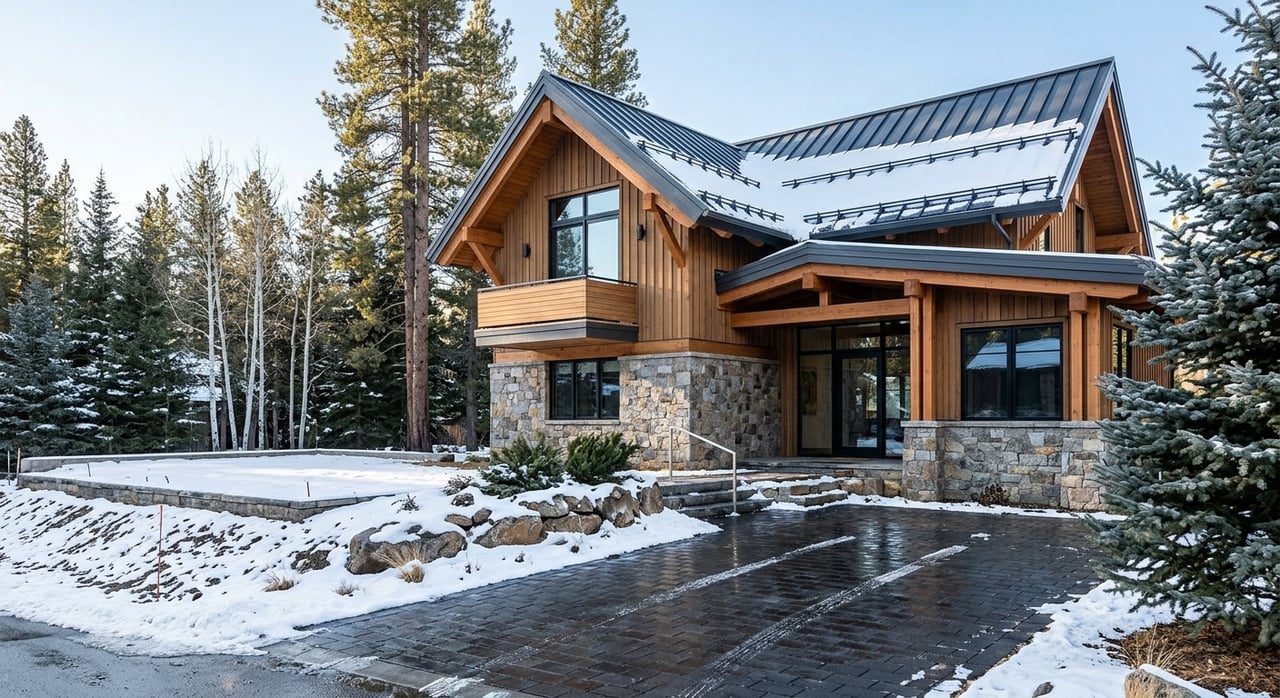
The Colony’s design guidelines support a site-sensitive approach. The published standards emphasize homes that integrate with natural conditions and minimize visual impact, and the framework includes guest homes and accessory structures, though exact allowances can vary by lot.
For many buyers, that level of personalization is the main reason to build. You are not just creating a floor plan. You are shaping how the home sits on the land, captures views, manages privacy, and supports four-season use.
Custom Design Benefits
A custom build may be worth the extra effort if you want to prioritize:
- A layout built around entertaining or multi-generational stays
- Dedicated ski storage and après-ski gathering space
- Spa, fitness, or wellness rooms
- Larger garage capacity for mountain living needs
- A design that responds to the homesite’s trees, slope, and sightlines
In a community like The Colony, those choices can have long-term value. Homes that feel connected to the lot and the mountain setting may hold stronger appeal over time.
Why Building Takes Longer
The tradeoff is complexity. Building in The Colony involves HOA design review, county permitting, inspections, and construction logistics that do not apply when you buy an existing home.
The Site and Architectural Review Committee evaluates plans using the community guidelines. Summit County also requires a building permit for construction, enlargement, alteration, repair, movement, improvement, removal, conversion, or demolition, and some projects need separate planning approval before a building permit can even be submitted.
Financing can add another layer. Construction loans are usually short-term, often carry higher rates than standard mortgages, and typically disburse funds in stages.
Building Process Watchouts
Before you commit to a homesite, pay close attention to:
- HOA design-review requirements
- County permit timelines
- Potential planning approvals before permit submission
- Construction-loan structure and timing
- Site conditions that may affect cost or schedule
For most buyers, buying an existing home is usually faster. Building can be rewarding, but it requires patience, planning, and a clear understanding of the process.
Why Lot Constraints Matter
In The Colony, not every lot offers the same flexibility. Some homesites come with added restrictions tied to low-impact permit requirements, tree-clearing limits, height controls, lighting rules, or roof-material standards.
That means the lot often shapes the outcome as much as the architect does. A beautiful parcel may still have constraints that affect home size, placement, or design options.
This is one of the biggest reasons due diligence matters before you buy land. If you are deciding between a vacant lot and a finished home, the lot-specific rules deserve a close review early in the process.
When Buying Makes Sense
Buying an existing home can be the stronger option if you want immediate or near-term use. You can avoid the full design-review and construction path and move more quickly toward closing and enjoying the property.
That speed matters in a lifestyle market. If your goal is to ski next season instead of planning several steps ahead, an existing home may better match your timeline.
Buying can also give you more certainty upfront. You can evaluate the actual floor plan, finishes, views, ski access, and privacy before you close, rather than making those decisions on paper during a long build cycle.
Advantages of Buying Existing
An existing home may be a better fit if you want:
- Faster access to the property
- A more predictable transaction timeline
- The ability to inspect the finished product before purchase
- Fewer moving parts than a custom build
- A turnkey option in a supply-constrained market
Buyers should still use standard protections where appropriate, including financing and inspection contingencies.
Inventory Is the Main Challenge
The biggest obstacle to buying is often availability. The Park City market remains tight, and inventory has been reported at roughly 20% to 30% below pre-COVID levels.
Market activity also shows continued demand. The Park City Board of Realtors reported $1.195 billion in Q1 2026 sales across the Wasatch Back, with single-family units up 14% year over year and sales volume up 9%.
In the ultra-luxury segment, pricing can move sharply on a small number of sales. In Canyons Village, the single-family median price reached $23.5 million in Q1 2026 based on just three transactions.
That is important context if you are waiting for the perfect resale. Inventory can be limited, and pricing can be sensitive when only a few homes trade in a quarter.
Compare Building vs Buying
Here is a simple way to think about the decision:
| Factor | Building | Buying |
|---|---|---|
| Timeline | Longer due to review, permits, and construction | Usually faster |
| Customization | High | Limited to existing layout and finishes |
| Process | More complex | More straightforward |
| Certainty upfront | Lower during design and construction | Higher because you can evaluate the completed home |
| Inventory risk | Depends on lot availability | Depends on resale inventory |
If your priority is control, building may be worth it. If your priority is speed and simplicity, buying often wins.
Don’t Overlook Ongoing Costs
Whether you build or buy, ownership costs go well beyond the purchase price. You should plan for repairs, property taxes, insurance, mortgage costs if applicable, and HOA dues.
In The Colony, the HOA dues alone are substantial at $29,000 for 2026. That recurring cost should be modeled alongside principal and interest if you are financing, as well as insurance and property tax obligations.
For high-value mountain property, carrying costs are part of the ownership equation from day one. A clear budget can help you compare options more realistically.
Understand Rental Flexibility
If rental income is part of your thinking, The Colony deserves a careful look. The HOA states that recurring short-term rentals requiring a business license are prohibited, while a single rental in any 28-day period is not treated as commercial use.
That makes The Colony more restrictive than many resort communities. In practical terms, buyers should evaluate these properties first as lifestyle assets rather than high-rotation vacation rentals.
This does not make ownership less appealing. It simply means your use plan and financial expectations should match the community rules.
What Tends to Support Resale
In a setting like The Colony, resale strength is often tied to how naturally a property fits its surroundings. Homes that preserve privacy, feel integrated with the lot, and respect the mountain setting may have stronger long-term appeal.
That aligns with the community’s design goals, which focus on minimizing visual impacts and protecting property values. It also fits a market that continues to show demand for premium, well-executed inventory.
If you build, thoughtful design matters. If you buy, look closely at how well the home sits on the site, not just how it looks in photos.
Which Path Fits You Best
There is no one-size-fits-all answer in The Colony. Building may be the right move if you want a highly personalized mountain estate and are comfortable with a longer, more detailed process.
Buying may be the better choice if you want quicker access, more certainty, and the ability to evaluate a completed home today. In both cases, the smartest decisions usually come from understanding the lot, the HOA framework, the carrying costs, and your real timeline for use.
If you are weighing land versus resale in The Colony, local guidance can make the process clearer. The team at Jensen and Company can help you evaluate available opportunities, compare the tradeoffs, and navigate this unique Park City ski community with confidence.
FAQs
Can you build a guest house in The Colony?
- Published Colony materials include provisions for guest homes and accessory structures, but the exact rules can vary by lot and appendix, so the specific homesite should be verified before purchase.
Is building or buying faster in The Colony ski community?
- Buying is usually faster because building requires HOA review, county permits, inspections, and construction financing.
Is The Colony a good fit for short-term rental income?
- The HOA restricts recurring short-term rentals that require a business license, so buyers should view the property primarily as a lifestyle purchase rather than a high-rotation rental.
What are the HOA dues in The Colony?
- The HOA lists 2026 dues at $29,000.
Why do lot-specific rules matter in The Colony?
- Some lots have additional restrictions related to permits, tree clearing, height, lighting, or roof materials, which can affect what and how you build.